
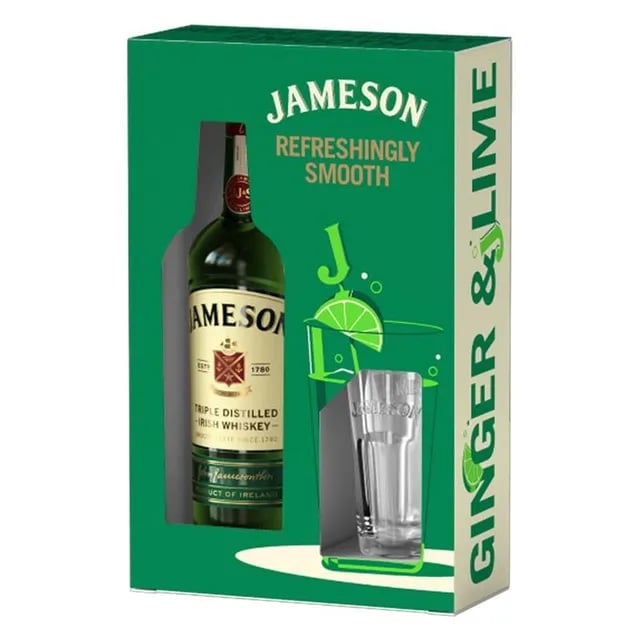
If you've ever found Scotch a little intense or bourbon a touch sweet, Irish whiskey is the gentle middle ground that tends to win people over on the first sip. It's the smooth, fruit-and-honey style that drinks beautifully neat yet is just as happy in a tall glass with soda — and it has quietly become a favourite pour across Nairobi.
This guide breaks down what Irish whiskey actually tastes like, the main styles you'll meet on the shelf, and how to pick a bottle worth opening.
What gives Irish whiskey its taste
Two things shape the classic Irish whiskey taste more than anything else: how it's distilled, and the wood it sleeps in.
Most Irish whiskey is triple-distilled, while Scotch is usually distilled twice. Each extra pass through the still strips away heavier, oilier compounds and leaves a lighter, cleaner spirit behind. That is the technical reason Irish whiskey so often gets described as soft and rounded rather than fiery.
It's also mostly unpeated. Peat is the earthy, smoky, almost medicinal character you find in many Scotch whiskies; in Ireland it's the exception, not the rule. Take the smoke away and you're left with the fruit, grain and oak underneath — which is exactly the point. Peated Irish whiskey does exist, but it's genuinely rare.
Then the spirit spends years resting in oak. Ex-bourbon barrels nudge it toward vanilla and honey; ex-sherry casks push it toward dried fruit and spice; and finishing casks — stout, rum, port — add their own twist. The cask does a huge amount of the flavour heavy lifting.
Is Irish whiskey smooth?
Short answer: yes — smoothness is its calling card. The combination of triple distillation, little-to-no peat smoke and patient oak ageing makes most Irish whiskey notably easy-drinking, which is exactly why it's such a friendly first whiskey and a reliable crowd-pleaser at a gathering.
"Smooth" doesn't mean simple, though. A good Irish whiskey still gives you layers — orchard fruit, warm spice, toasted oak — just without the rough edges that can make a spirit feel like hard work.
The main types of Irish whiskey
Once you know the four main types of Irish whiskey, the shelf in any shop suddenly makes sense.
Blended Irish whiskey is the everyday workhorse and by far the biggest category. It marries smooth grain whiskey with more characterful malt or pot still whiskey for an easy, balanced pour. Jameson is the obvious example, and Roe & Co is a richer, more modern take on the style. Blends are where most people start, and the blended whisky shelf is the natural place to browse them.
Single malt is made from 100% malted barley at a single distillery. Expect more depth and weight — think Teeling Single Malt, where the fruit and oak get room to stretch out. If this becomes your lane, the single malts section is worth a slow scroll.
Single pot still is the proudly Irish one: made at a single distillery from a mash of both malted and unmalted barley. That unmalted barley gives a distinctive creamy, spicy, slightly oily texture you don't really find anywhere else in the whiskey world.
Grain whiskey is light and gentle, usually made from maize or wheat. On its own it's soft and subtle; more often it's the smooth backbone hiding inside a blend.
And then there's the honorary member: Irish cream liqueur, like Baileys — whiskey blended with cream and sugar. It isn't built to sip neat, but it's the easiest gateway of all and a dessert-in-a-glass favourite.
How to read Irish whiskey tasting notes
You don't need a sommelier's vocabulary. Most Irish whiskey lives in a handful of familiar flavours:
- Fruit — green apple, pear, citrus, plus dried fruit like raisin from sherry casks.
- Vanilla and honey — soft sweetness drawn from time in oak.
- Spice — gentle pepper, cinnamon and clove, especially in pot still styles.
- Toasted oak — a warm, woody backbone that frames everything else.
A whiskey finished in another cask wears it openly. Jameson Caskmates Stout, for instance, picks up cocoa and coffee notes from ageing in stout barrels, while a deeper expression like Jameson Black Barrel leans into spicier, more charred oak.
How to drink it
- Neat — the best way to taste what the distiller intended; a drop of water opens it up.
- On the rocks — one large cube chills it without watering it down too fast.
- In a highball — Irish whiskey with soda or ginger ale over ice is criminally easy to drink.
- In cocktails — it's the soul of an Irish coffee and a great base for a whiskey sour.
A friendly, rum-cask-finished blend like Teeling Small Batch is ideal if you want one bottle that holds up neat and shines mixed.
Buying Irish whiskey in Kenya
Irish whiskey is now genuinely easy to find in Nairobi, and you no longer have to trek across town for a good bottle. At Oaks & Corks we deliver across the city, so you can compare bottles, read the notes and order in a couple of taps — whether you want a party-ready blend or a single malt for a quiet evening. If you're still exploring, the full all whisky range is a good place to wander. You can also browse more guides like this one over on the blog, or start from the homepage.
Shop Irish whiskey
A few bottles to start with, all available for delivery in Nairobi:
- Jameson 750ml — KSh 2,819 — the smooth, all-purpose classic.
- Jameson 1L — KSh 3,369 — the same easy pour, bigger bottle.
- Roe & Co — KSh 4,899 — a richer, vanilla-led modern blend.
- Teeling Small Batch — KSh 3,259 — rum-cask finished and supremely sippable.
- Teeling Single Malt — KSh 6,179 — for when you want more depth.
- Jameson Caskmates Stout — KSh 4,999 — cocoa and coffee from stout casks.
- Jameson Black Barrel — KSh 5,399 — a deeper, spicier gift-box pour.
- Baileys Irish Cream — KSh 1,499 — the creamy crowd-pleaser.
Whichever you choose, enjoy it the way it's meant to be enjoyed — slowly. Strictly for over-18s; please drink responsibly.