
Wine appreciation is not only about what is in the bottle. The glass itself plays an important role in how wine looks, smells and tastes. Different wine glass shapes are designed to highlight different characteristics, from delicate aromas and lively bubbles to bold structure and fuller body. For anyone interested in wine culture, understanding wine glass types is a useful step towards a more informed tasting experience.
Before looking at the different styles, it helps to understand the structure of a wine glass and why each part matters.
The Parts of a Wine Glass and Why They Matter
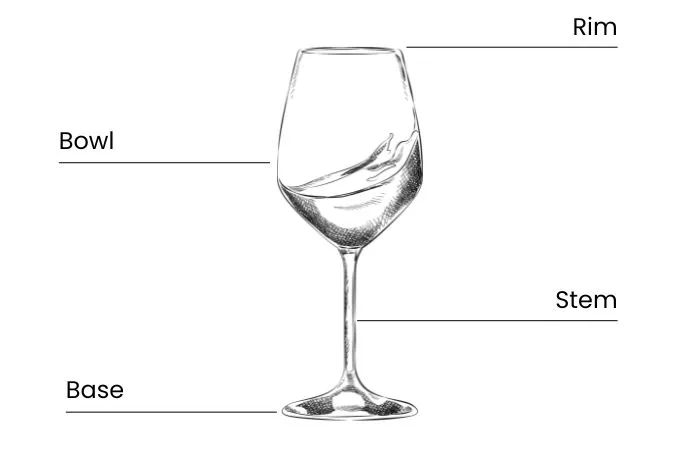
A wine glass may seem simple, but each part has a specific function that affects the drinking experience.
Base
The base is the flat bottom of the glass. Its purpose is to provide stability and support, allowing the glass to stand securely on a table or bar surface.
Stem
The stem connects the bowl to the base. It allows the glass to be held without transferring too much heat from the hand to the wine. This is especially important for white wines, rosé and sparkling wines, which are generally best served cool.
Bowl
The bowl is the main body of the glass where the wine is poured. Its size and shape influence oxygenation and the concentration of aromas. A larger bowl gives wine more surface area and more contact with air, while a narrower bowl helps preserve freshness and focus delicate scents.
Rim
The rim is the top edge of the glass. It influences how the wine flows onto the palate and how it first makes contact with the mouth. The width and shape of the rim can also help direct aromas towards the nose.
Understanding these parts makes it easier to see why certain wines are traditionally served in specific glasses. The design is not just about elegance. It is about helping the wine show its character more clearly.
Why Wine Glass Shape Matters
The shape of a wine glass can affect aroma, flavour, texture and balance. A wider bowl allows more aeration, which can help fuller-bodied wines open up. A narrower opening can concentrate aromas, making delicate notes easier to notice. Some glasses are designed to preserve bubbles, while others help soften tannins or highlight fruit and floral notes.
Using a specialised glass is not essential for enjoying wine, but the right shape can make the tasting experience feel more expressive and refined.
Types of Wine Glasses
Chardonnay Glass
A Chardonnay glass usually has a slightly wider bowl than a standard white wine glass. This shape is suited to fuller-bodied white wines because it allows more oxygen to interact with the wine and helps reveal creamy texture, ripe fruit notes and oak influence where present. It is often associated with richer styles of Chardonnay.
Universal Glass
The universal glass is one of the most practical options for everyday use. It has a medium-sized bowl and a gently tapered rim, making it suitable for a wide range of red, white and sparkling wines. For wine drinkers who do not want a separate glass for every style, the universal glass is a balanced and versatile choice.
Cabernet or Bordeaux Glass
A Cabernet or Bordeaux glass is typically taller, with a broad bowl and a slightly narrower opening. It is designed for bold, structured red wines such as Cabernet Sauvignon and Bordeaux blends. The larger bowl encourages aeration, while the taper helps focus aromas and soften the impression of tannin.
Pinot Noir Glass
The Pinot Noir glass is easy to recognise because of its large, rounded bowl. This shape gives delicate red wines more surface area for aeration and helps release subtle floral and red fruit aromas. It suits lighter-bodied, aromatic wines that rely more on elegance than power.
Champagne Glass
Sparkling wines are often served in tall, narrow glasses because these help preserve carbonation and keep the bubbles lively for longer. The classic flute is widely known, while tulip shaped sparkling wine glasses are also popular because they offer a little more room for aromas to develop. Both styles are designed to support freshness and effervescence.
Dessert or Port Glass
Dessert and Port glasses are generally smaller than standard wine glasses. This is because sweet and fortified wines are usually served in smaller pours. Their shape helps concentrate the wine’s rich aromas while keeping the serving size appropriate for more intense styles.
How to Choose the Right Wine Glass
Not everyone needs a full collection of specialist glassware. A quality universal glass can work well for many wine styles. However, for those who enjoy exploring wine more closely, having a few different glass types can enhance the experience.
When choosing wine glasses, look for glasses that feel balanced in the hand, offer enough room for swirling and are made from clear glass so the wine’s appearance can be appreciated properly. Thin rims are often preferred because they create a smoother sipping experience.
Final Thoughts
Learning about wine glass types helps make wine appreciation more informed and enjoyable. From the stable base and slender stem to the bowl and rim, every part of the glass contributes to how wine is experienced. Whether the wine is a rich Chardonnay, a structured Cabernet Sauvignon, an elegant Pinot Noir or a lively sparkling wine, the right glass can help highlight its individual character. Oaks and corks also features a wide range of wine product information that can support broader wine knowledge.
